
Systems and operating roles
TMS — Transportation Management System: coordinates freight movements, carrier assignments, stops, milestones and transportation documents. WMS — Warehouse Management System: controls inventory, locations, picking, staging and receiving within facilities. ERP — Enterprise Resource Planning: typically owns commercial orders, master data and financial processes.
3PL — Third-party logistics provider: coordinates logistics services for other organizations, potentially involving transport, warehousing and multiple service partners. A freight broker coordinates a customer's transportation requirement with a carrier; an asset-based carrier operates the resources that execute movements. Their responsibilities overlap in freight context but should not be treated as identical.
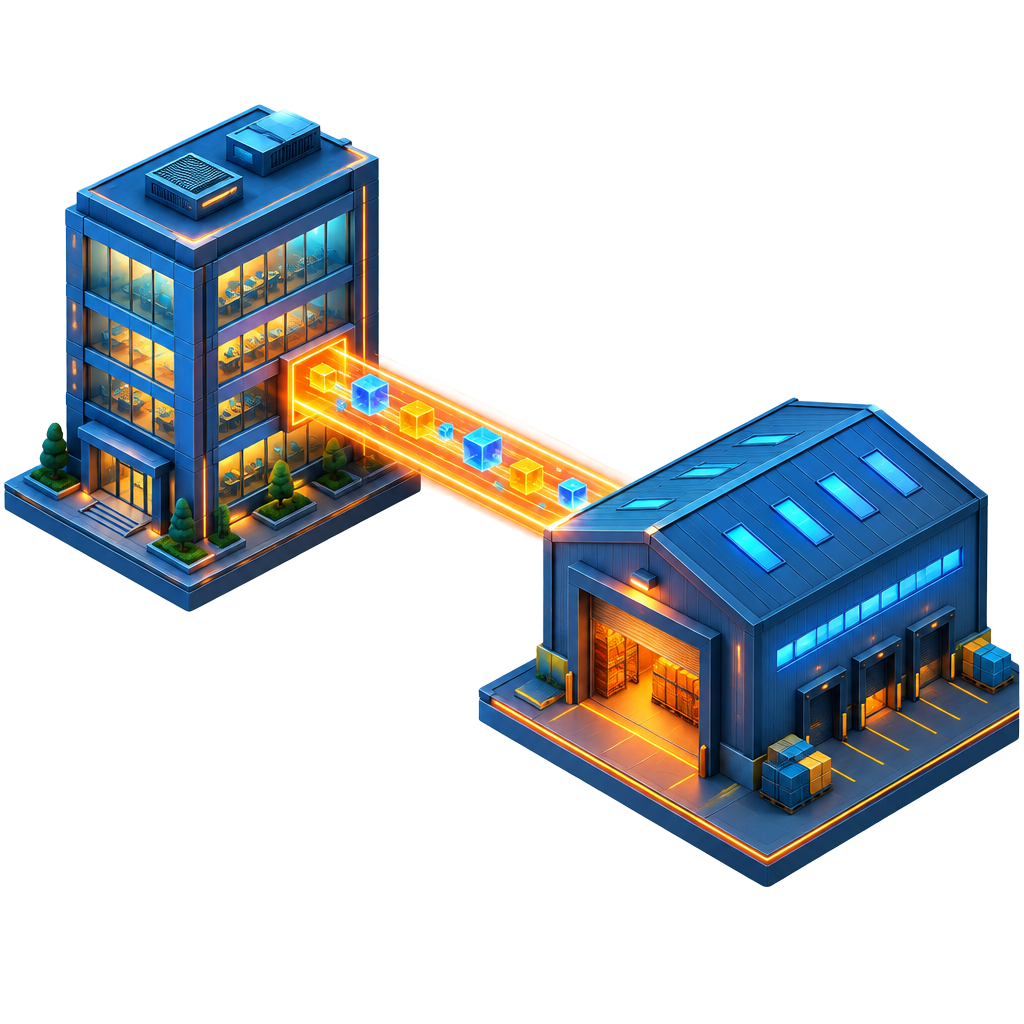
WMS
Inside the facility
- Inventory & locations
- Pick / pack / stage
- Handling units & receipt
Kaporeal / TMS
Between facilities
- Load & carrier assignment
- Appointments & movement
- Milestones & freight documents
ERP / Accounting
Commercial system of record
- Orders & customer accounts
- Financial posting & tax
- Payables / receivables
Documents and handoff evidence
BOL — Bill of lading: documents the shipping handoff and freight context; the exact legal and operational meaning depends on the transaction. POD — Proof of delivery: evidence of the receiving handoff, often requiring review for completeness or exceptions. A rate confirmation relates commercial transport terms and is not interchangeable with physical delivery evidence.
ASN — Advance shipment notice: gives a receiver expected shipment context before arrival. Handling unit: an identified physical grouping such as a pallet or case. An appointment is an agreed facility window; an ETA is an estimate; an arrival is an observed event. Treating those three as equivalent creates misleading status histories.

Identifiers and electronic exchanges
MC / DOT identifiers provide carrier-related identity context in relevant US transportation workflows. Recording them does not verify authority, insurance or compliance. ELD means electronic logging device; telematics may supply vehicle observations, but those observations need load and stop context before supporting a freight milestone.
EDI — Electronic Data Interchange: structured business-message exchange under negotiated partner agreements. ANSI X12 204 concerns load tendering, 214 status and 210 freight invoice information. 940 / 945 may support warehouse shipping-order and shipping-advice exchanges. These are terminology references and proposed integration areas, not supported Kaporeal adapters.

Rust platform terms
Crate: a Rust package; Kaporeal is planned as a workspace of domain, storage, API, UI and edge crates. Dioxus: a Rust UI framework targeting web, desktop and mobile. Edge runtime: a small Rust program on a gateway or device that captures events close to their source.
Outbox: a table written in the same transaction as a record change, from which events are delivered reliably. Idempotency key: a client-supplied value that makes a retried request safe.