
05 / Regional & last-mile
The daily operating problem
PlannedRegional delivery teams may coordinate shorter movements, repeat facilities and multiple handoffs in a day. The operational challenge is often the distinction between a route plan, a driver's reported progress and actual delivery evidence. A failed delivery or partial receipt cannot be reduced to a generic completed state without losing information that customer service needs.
The core load, stop, event and document concepts provide a starting vocabulary, but the initial MVP focuses on point-to-point freight. Later regional and multi-stop modeling should clarify how one vehicle movement relates to several customer shipments and which proof belongs to each handoff. An illustrative dispatcher would need to distinguish an attempted stop from a completed receipt and preserve the reason for a return or reschedule.
Driver mobile workflows, routing optimization, geofencing, customer notifications and specialized multi-stop operations are planned or research. There is no live delivery app, route engine or automated proof-of-delivery service here. Regional operators can shape the design by explaining attempted delivery, changed sequences, split receipts and the references needed to reconcile a day's work without pretending the current framework already handles every last-mile pattern.

Illustrative workflow
A workflow story
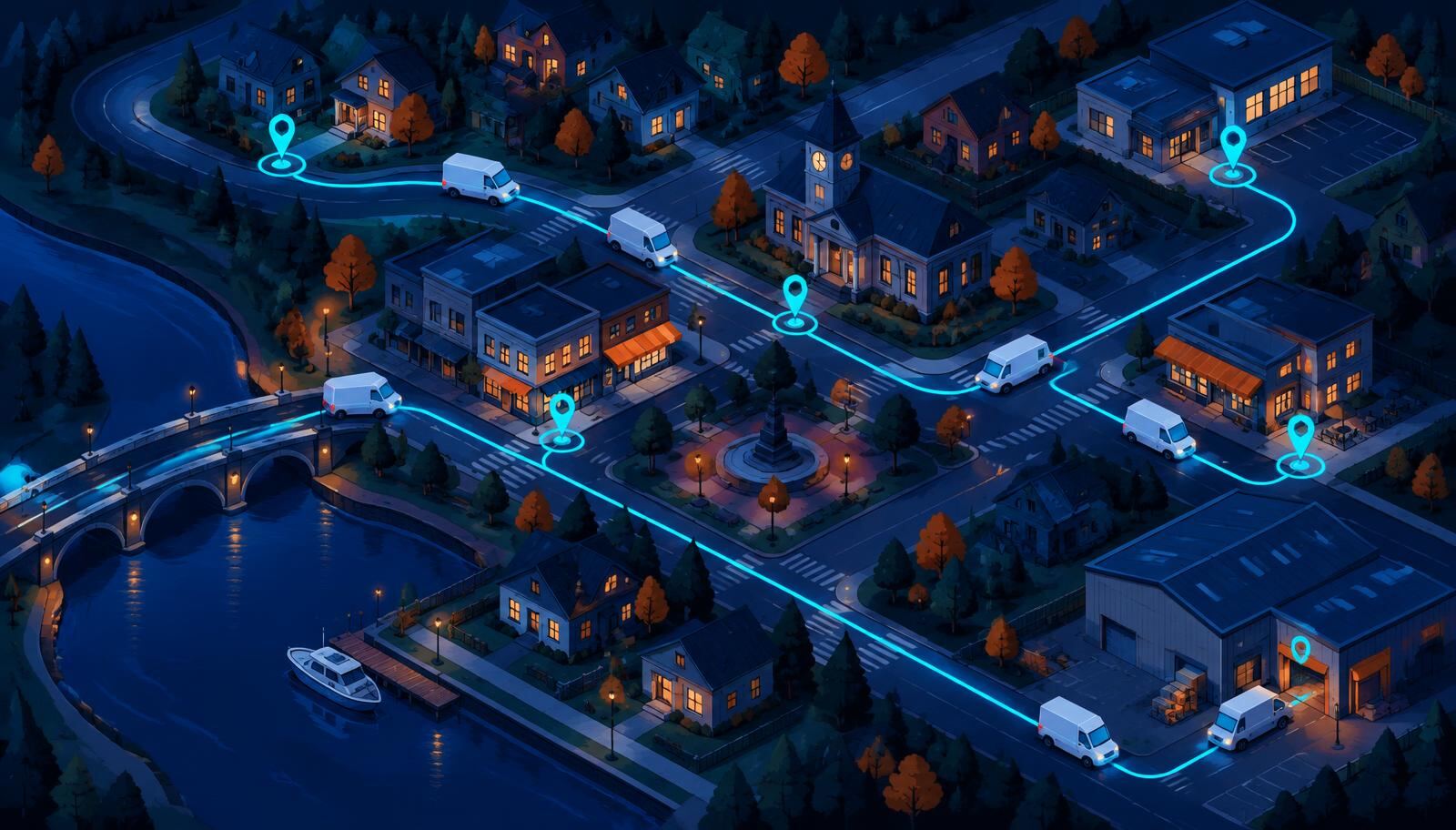
A regional carrier runs a multi-stop route. Each stop has its own expected window and evidence requirement. A failed delivery attempt is recorded as an event with a reason code, not hidden as a skipped stop, so the customer conversation starts from facts.
Route optimization is not a Kaporeal goal for the core. The plan is to integrate with routing engines rather than compete with them.

Relevant modules and their status
These are the parts of the conceptual module map that matter most for this scenario. Status labels describe development state, not availability for production use.
- Multi-stop loads (Planned)
- Stop-level evidence (Planned)
- Mapping and routing adapters (Planned)
- Driver handset views in Dioxus (Future)

What is not built, and may never be core
PlannedBeing clear about scope is part of being useful. The following are either not built yet or are deliberately left to neighboring systems.
- Route optimization
- Consumer delivery notifications
- Photo-capture mobile app