
03 / Multi-party coordination
The daily operating problem
PlannedA third-party logistics team often coordinates customers, carriers, warehouses and several internal roles. Each party may use a different reference, and each customer may expect a different document packet or exception process. A status update that is correct for one participant can still be insufficient for another if it does not identify the relevant shipment or handoff.
Kaporeal's proposed transportation model supplies a common load context while retaining external references and event provenance. An illustrative coordinator associates the customer's order and the warehouse shipment with a movement, records the carrier assignment and follows readiness, departure and receipt as separate facts. The transportation record should make responsibility visible without trying to replace each partner's authoritative system.
Scoped customer and carrier portals, configurable document requirements, richer organization boundaries and multi-party integrations are planned. No production multi-tenant platform or partner portal is claimed. Warehouse readiness exchanges and ERP / accounting relationships require negotiated contracts. The most useful 3PL modeling input describes how references are reconciled, who owns each exception and what evidence is required before a handoff can be considered complete.

Illustrative workflow
A workflow story
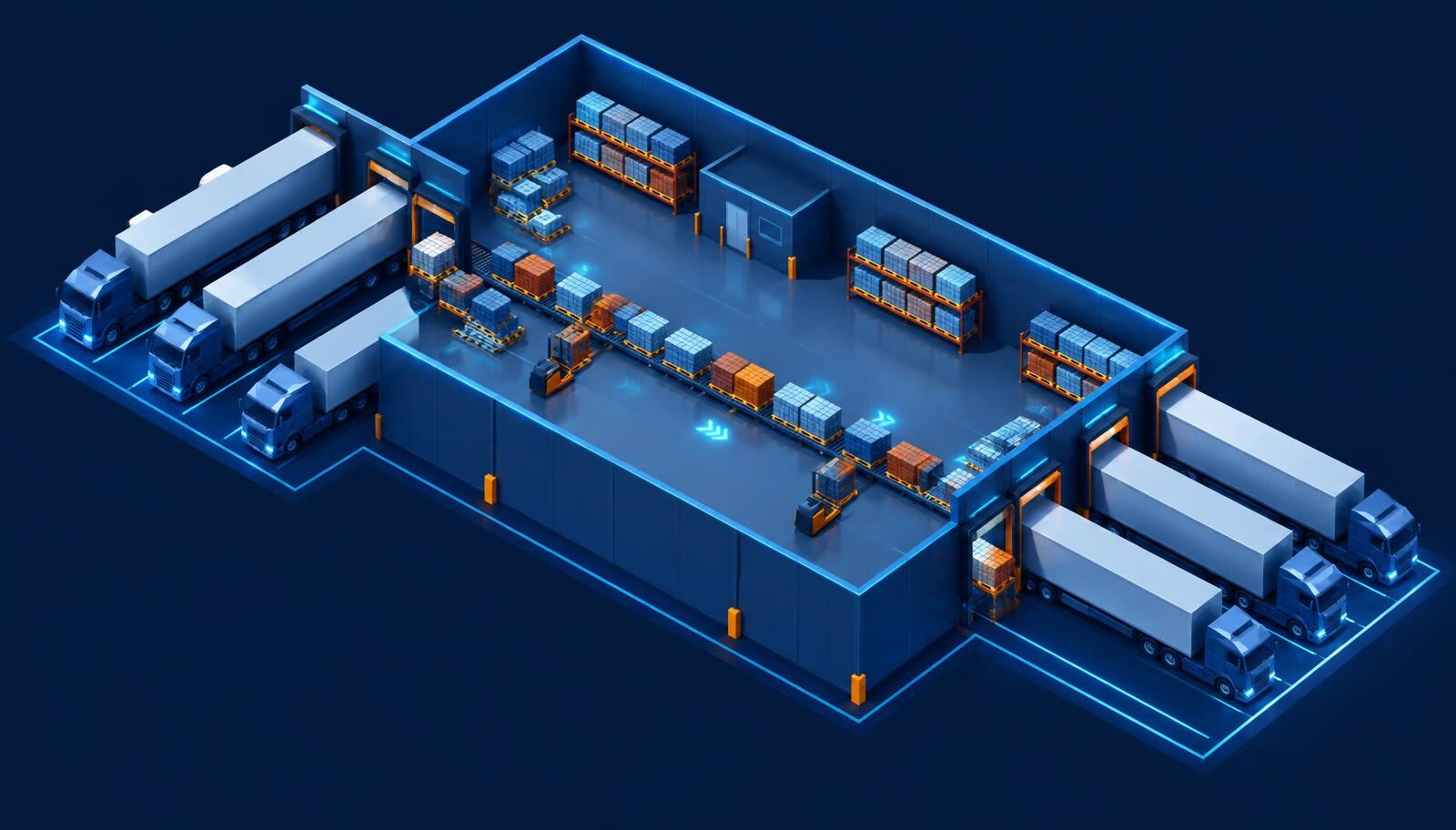
A 3PL manages outbound freight for several clients from shared warehouses. Each client needs its own reference, document packet and exception process. In the illustrated model, the load carries an external reference per party, so a status update can be routed correctly without exposing one client's data to another.
Organization boundaries matter more here than in any other scenario. They are a core design requirement, not a later security add-on.

Relevant modules and their status
These are the parts of the conceptual module map that matter most for this scenario. Status labels describe development state, not availability for production use.
- Organization and tenant boundaries (In Progress)
- Per-customer references and document rules (Planned)
- WMS handoff contracts (Planned)
- Customer portal concepts (Planned)

What is not built, and may never be core
PlannedBeing clear about scope is part of being useful. The following are either not built yet or are deliberately left to neighboring systems.
- Client billing and storage charges
- Multi-client portal
- Production EDI connections